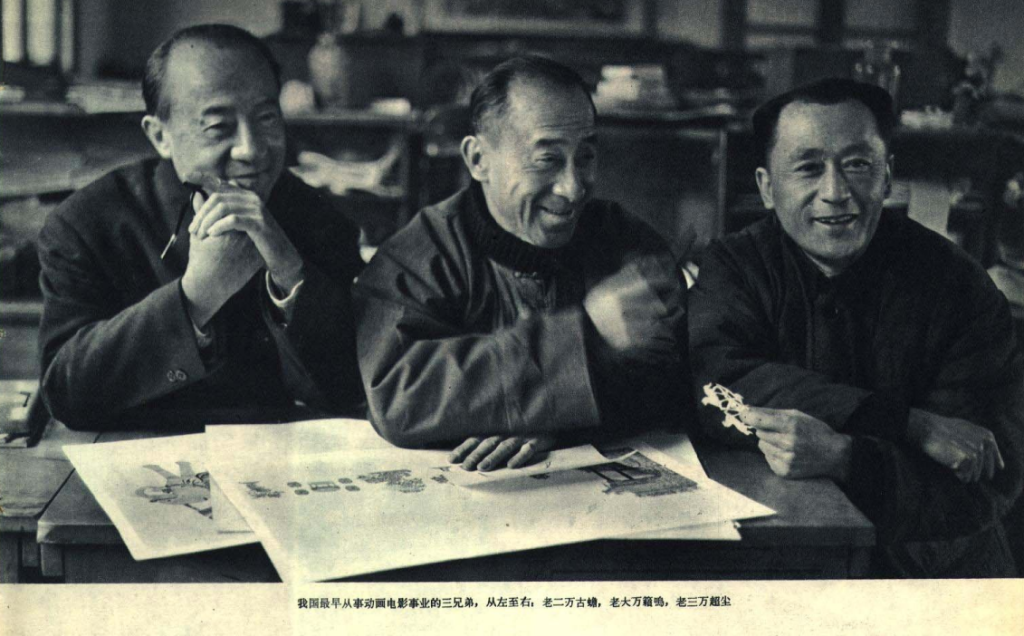
This blog post is designed to showcase my researches of an animation team that was established in the early days of China.
History&Background
In the 1920s, with the deepening of Western entertainment culture in China, a large number of foreign animated films became popular in China, and novel animation images gradually became popular among Chinese people.

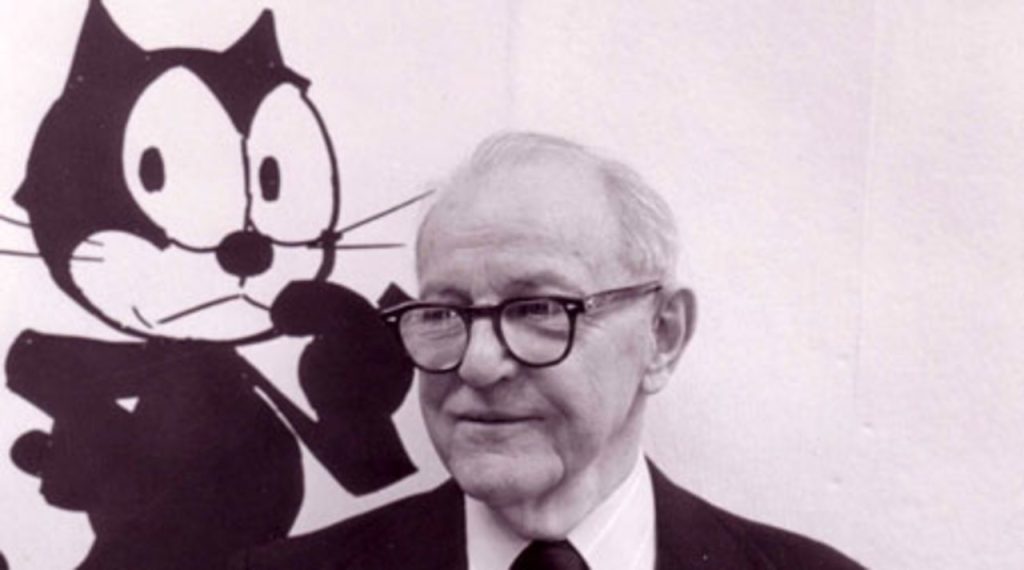
& Otto Messmer’s Black Cat
Development
Brothers Wan(hereinafter referred to as”Wan”), beginning in 1927, successively created cartoon images such as little black man, small white rabbit, black cat, and black dog, and made animated films such as “Monkey Shop”, “Paper Man Mess”, “Calamity” and “The Tortoise and the Hare Race”. These films are short silent animations with no character dialogue and Chinese subtitles to advance the story. As a result, they were not released independently, but were shown before feature films and gradually became popular with audiences. In the mid-1930s, on the basis of learning from the western animation production techniques and the maturity of his own skills, Wan began to try to create animation works with distinct Chinese elements, and the smiling monkey image and its related cartoons were born in this period.
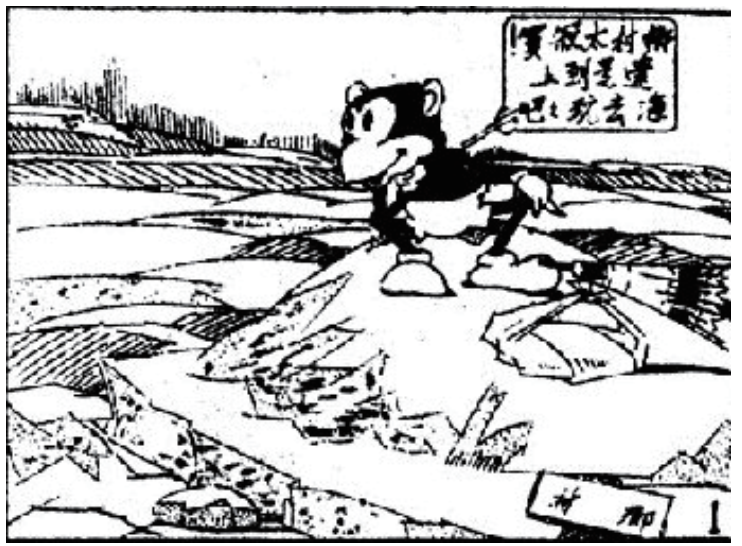
During this period, their works had a strong visual sense of Western animation images, and most of their creations were still based on the skills and characters of Western animation.
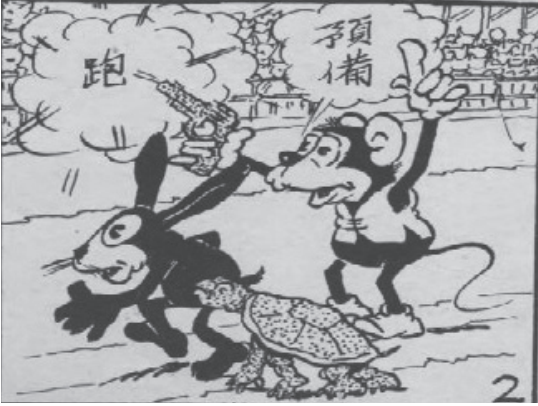
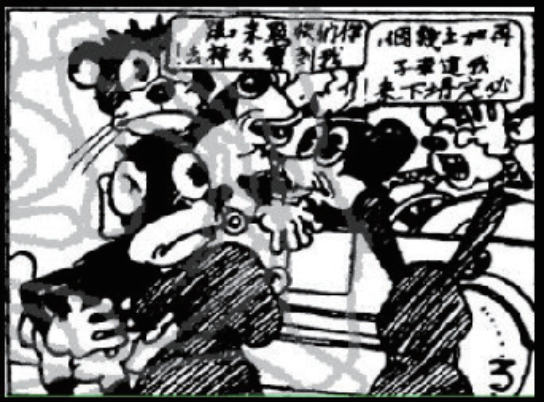
The early image of the laughing monkey has a strong Disney style. When he began to create animation, due to the lack of mature experience and technology, Wan drew his own animation works by imitating Western animation, and the initial laughing monkey and previous animation images were born in this situation. Wan Guchan recalled that the camels, lions and tigers in “Camel Offering Dance” are still very much like the images of Western animation and comics. In addition to the above reasons, they also summed up other difficulties in the creation of national animation: First, Chinese jokes are mostly running through the lines, and it is difficult to present in action. Second, animation requires a highly expressive animal or character, and Chinese painting is difficult to produce vivid because of the relationship between clothing, so the style of Chinese painting is not suitable for animation. Third, Chinese robes and cheongsam are not funny and are not easy to draw, and clothes and bodies in action are more difficult to draw.
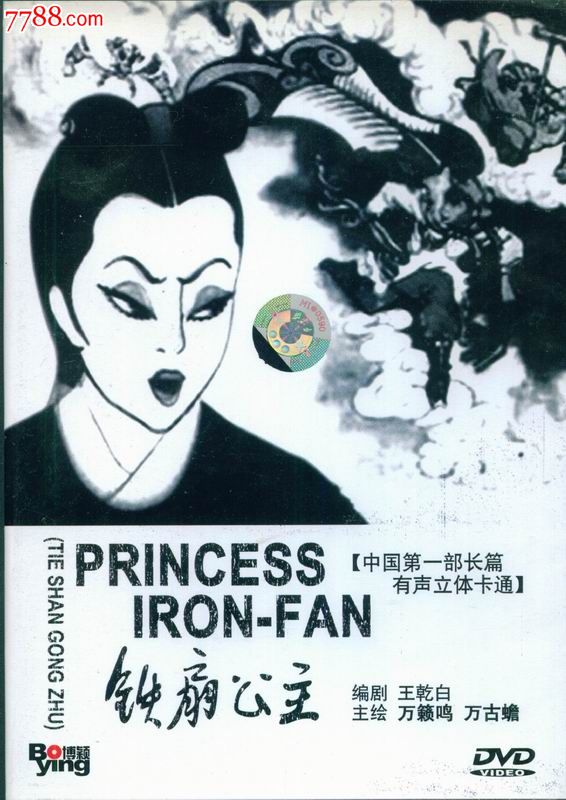
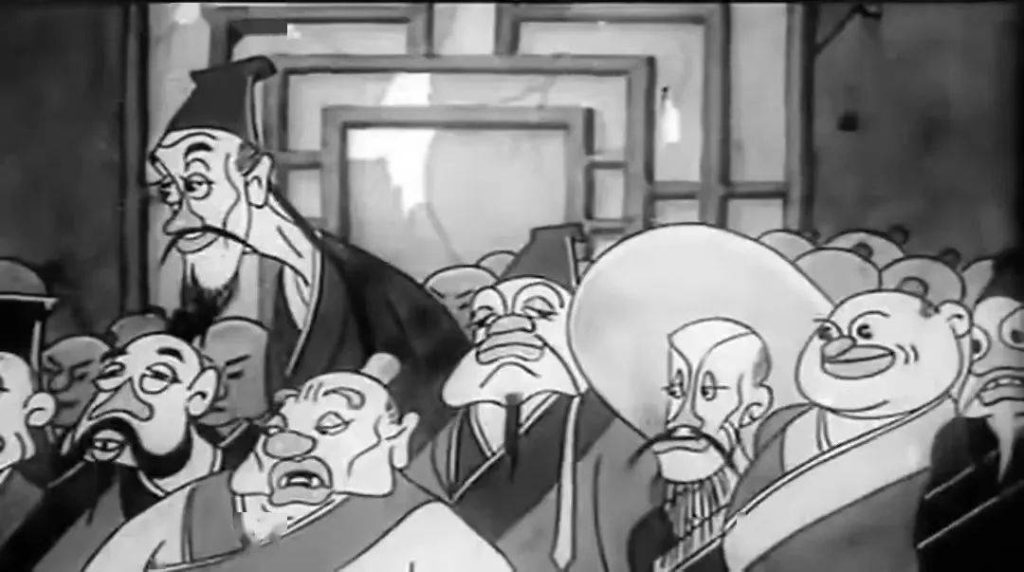
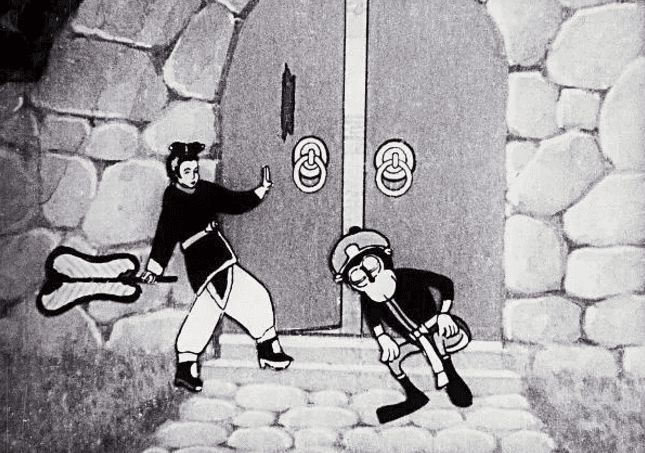
By 1941, with the continuous improvement of Wan’s breakthrough, “Princess Iron Fan” was produced, marking the maturity of their animation production, but also marked the first Chinese animated feature film came out, although it seems a little rough now, but it is the film that created the history of Chinese animated films.
In terms of the choice of subject matter, Wan decided to make a “Princess Iron Fan” with Chinese national characteristics based on “Sun Wukong borrows a banana fan three times” in “Journey to the West” to compare with “Snow White” based on Western fairy tales.
After more than a year, more than 100 people have participated in painting and filming, and through many difficulties, “Princess Iron Fan” was completed. The finished film is more than 9,700 feet long, can be shown for 1 hour and 20 minutes, in the big Shanghai, Xinguang, Huguang three theaters at the same time for more than a month, and the box office revenue exceeded all the feature films released in the same period.
“Princess Iron Fan” is a metaphor for “the whole people to unite against Japan”, and the original Chinese and Japanese copies included the subtitles “strive for the final victory of the war of resistance” (which was later deleted when the Japanese Army was about to occupy the concession). As a result, the film was banned in Japan shortly after its release. However, Princess Iron Fan influenced many Japanese animation practitioners, including the father of Japanese manga, Osamu Tezuka.
It is undeniable that the core of “Princess Iron Fan” has not got rid of the influence of Disney animation in the United States, such as the shape of Sun Wukong, with a big head and a small body, thin arms and legs and large hands and feet, which is completely the deformation of Mickey Mouse; For example, the large number of song and dance sequences in the show is clearly the way of Disney cartoons; Including in the title of the film, there is also a suggestion of attaching the heat of Snow White, but in fact, Princess Iron Fan is not the main character of the film. However, the defects do not obscure the virtues, “Princess Iron Fan” marked that in the 1920s, Chinese animation had reached the world advanced level.
The masterpiece of Chinese animated film
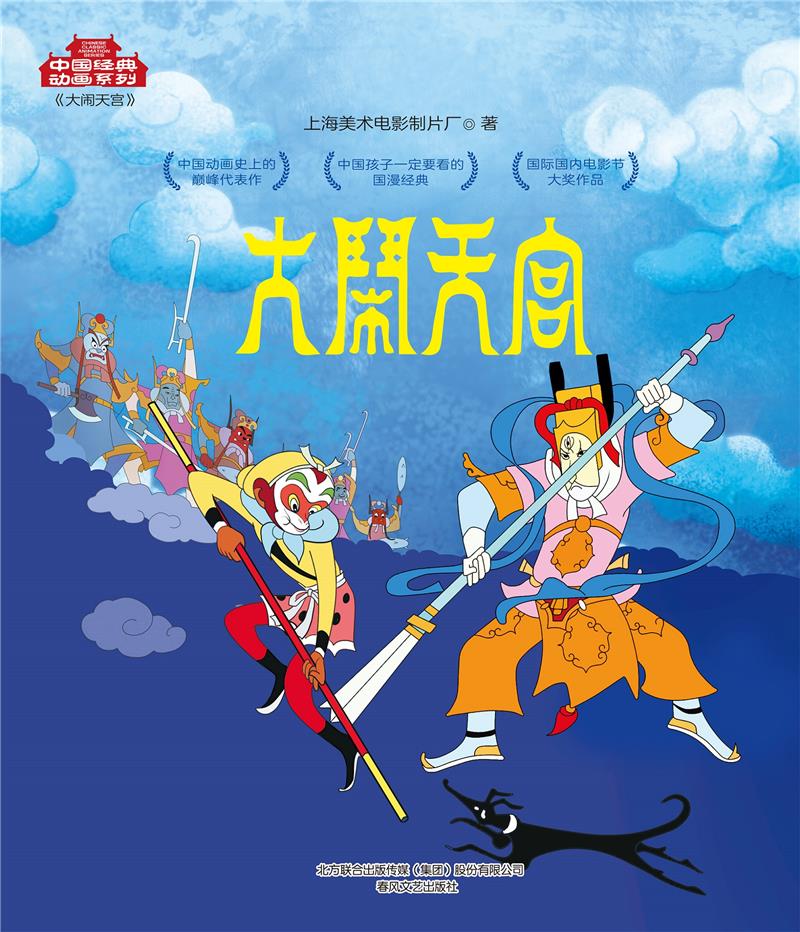
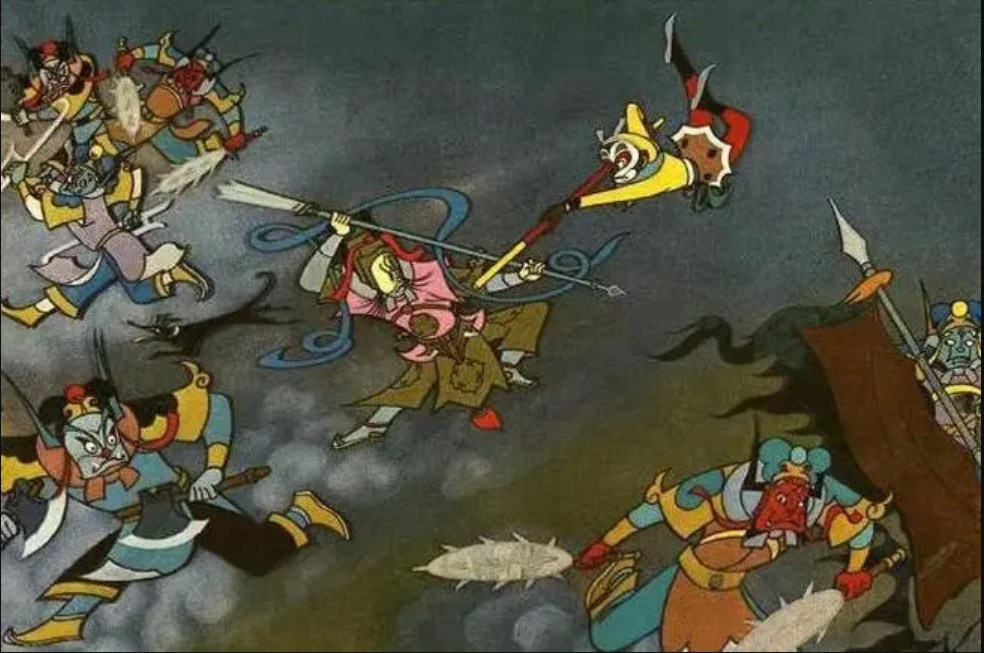
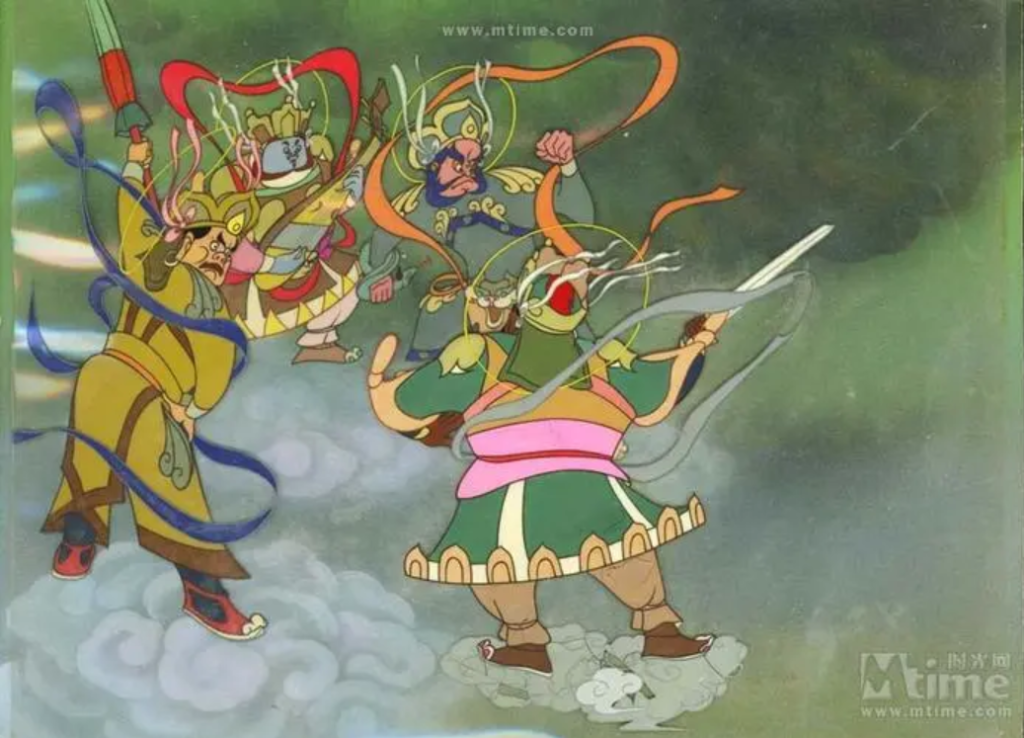
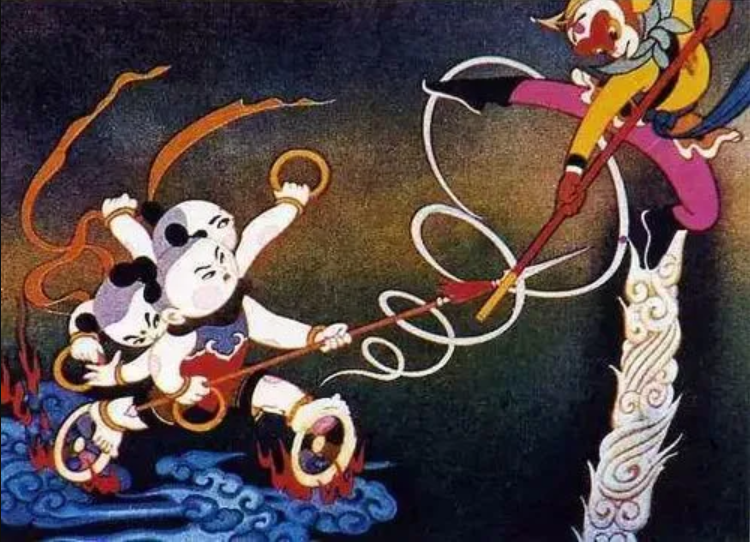
Media from all over the world have highly praised “Uproar in Heaven”. “Uproar in Heaven is the best animation ever,” commented the US weekly Variety. The Associated Press reported: “The film is vivid, a bit like Fantasia, but better than Disney’s work, the United States could never make such a cartoon.” “Uproar in Heaven, directed by Wan Laiming, is a true masterpiece of animation, almost like a beautiful symphony of pictures,” said Le Humane, a French newspaper.
